ECMO
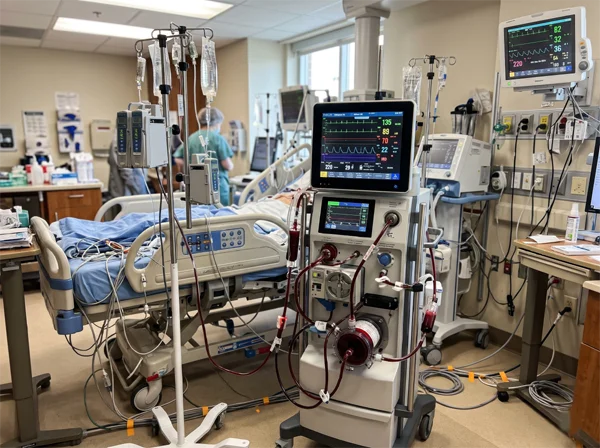
ECMO
ECMO Placement in Noida
Extracorporeal Membrane Oxygenation (ECMO) is an advanced form of life support used in selected patients with severe heart or lung failure. It uses a specialized circuit outside the body to help add oxygen to the blood, remove carbon dioxide, and, depending on the configuration, support blood circulation. ECMO may be considered when conventional treatment is not providing sufficient support.
For individuals researching ECMO Placement in Noida, understanding how the technology works, when it may be used, and what intensive care involves can help clarify this complex treatment. ECMO is generally provided to critically ill patients in specialized hospital settings with trained multidisciplinary teams.
Dr. Ravi Kumar Gupta is the doctor named for this service page. His current qualifications, professional affiliations, ECMO-related role, and the availability of ECMO services should be verified through reliable professional or institutional sources before publication.
What Is ECMO?
ECMO is a form of temporary life support that circulates blood through an external circuit containing a pump and an oxygenator. The oxygenator helps transfer oxygen into the blood and remove carbon dioxide before the blood returns to the patient.
ECMO does not directly cure the underlying disease. Instead, it may provide support while the heart or lungs recover, while clinicians treat the underlying condition, or while a decision about further treatment is made.
ECMO requires continuous monitoring because patients receiving it are usually critically ill and may need other treatments, medicines, and organ support.
The decision to initiate ECMO depends on the severity of illness, the likelihood of recovery or an appropriate next treatment, the patient's overall condition, and the potential risks.
Types of ECMO Support
There are two principal ECMO configurations. The choice depends on whether the main problem involves the lungs, the heart, or both.
Veno-Venous ECMO
Veno-venous (VV) ECMO primarily supports the lungs. Blood is removed from a large vein, passes through the external circuit for gas exchange, and is returned to the venous circulation.
It may be considered for selected patients with severe respiratory failure when conventional treatments, including appropriate ventilation strategies, are insufficient.
VV ECMO provides respiratory support but does not directly provide mechanical pumping support to replace the heart's function.
Veno-Arterial ECMO
Veno-arterial (VA) ECMO provides circulatory support as well as gas exchange. Blood is withdrawn from the venous circulation, passed through the circuit, and returned to an artery.
It may be considered in selected patients with severe cardiac dysfunction, cardiogenic shock, or certain forms of cardiac arrest when other measures are inadequate.
VA ECMO can affect the circulation in complex ways, so patients require close assessment of heart function, blood flow, and potential complications.
When Is ECMO Considered?
The need for ECMO Placement in Noida depends on the patient's clinical condition and the availability of appropriate specialist support. ECMO is generally considered when a potentially reversible or otherwise treatable life-threatening condition causes severe heart or lung dysfunction despite conventional treatment.
Severe Respiratory Failure
Severe respiratory failure occurs when the lungs cannot provide adequate oxygenation or remove carbon dioxide. Certain patients with acute respiratory distress syndrome or other serious respiratory conditions may be evaluated for VV ECMO.
The decision depends on the underlying cause, severity, response to conventional treatment, and the patient's overall suitability.
Cardiogenic Shock
Cardiogenic shock occurs when the heart cannot pump enough blood to meet the body's needs, resulting in inadequate organ perfusion. Selected patients with severe cardiac dysfunction may be considered for VA ECMO.
The underlying cause, potential for recovery, and alternative treatment options influence whether ECMO is appropriate.
Selected Cardiac Arrest Cases
ECMO may be used in specialized resuscitation pathways for selected patients whose circulation cannot be restored through conventional resuscitation alone. This approach is sometimes referred to as extracorporeal cardiopulmonary resuscitation (ECPR).
Eligibility depends on strict clinical and institutional criteria, including the circumstances of the arrest and the likelihood of a meaningful outcome.
Support Following Cardiac Procedures
In certain circumstances, ECMO may be used when severe cardiac or respiratory dysfunction develops during or after a major cardiac procedure. The decision depends on the nature of the complication and the available treatment options.
ECMO is not required for every patient undergoing cardiac surgery, and its use is reserved for selected critical situations.
Evaluation Before ECMO Treatment
ECMO is an urgent and complex intervention that requires rapid assessment. The medical team evaluates the patient's condition, the cause of organ failure, and whether the expected benefits of support justify its risks.
The assessment may include:
· Clinical examination: Evaluates circulation, breathing, neurological status, and organ function.
· Blood gas analysis: Measures oxygenation, carbon dioxide, and acid-base status.
· Echocardiography: Assesses heart structure and pumping function when relevant.
· Imaging: Helps evaluate the lungs, heart, and other suspected causes of deterioration.
· Laboratory tests: Assess blood counts, clotting, kidney function, liver function, and other clinical parameters.
· Review of previous treatment: Establishes how the patient has responded to ventilation, medication, resuscitation, or other interventions.
The assessment may be performed while other emergency treatments continue. In life-threatening situations, the clinical team must balance the need for rapid support with the risks of initiating ECMO.
How Is ECMO Initiated?
ECMO is initiated by a trained specialist team in an appropriately equipped hospital environment. Large blood vessels are accessed using cannulas, which connect the patient to the external circuit.
The circuit includes a pump, tubing, and an oxygenator. The configuration and cannula placement depend on whether respiratory support, circulatory support, or both are required.
Once ECMO begins, the team adjusts the circuit and monitors blood flow, oxygenation, carbon dioxide removal, blood pressure, and other clinical measurements.
Patients generally require intensive care, and additional treatments may be necessary to manage the underlying disease and support other organs.
The duration of ECMO varies. It depends on the patient's response, recovery of organ function, complications, and the availability of an appropriate next treatment.
Risks and Possible Complications
ECMO can provide temporary life support in selected critical situations, but it carries significant risks. The severity of the patient's underlying illness also affects the overall outlook.
Potential complications include:
· Bleeding related to cannulation, procedures, or anticoagulation.
· Blood clot formation within the circuit or circulation.
· Stroke or other neurological complications.
· Infection.
· Reduced blood flow or injury to a limb.
· Kidney injury or dysfunction of other organs.
· Red blood cell damage.
· Mechanical problems involving the circuit.
· Complications associated with prolonged critical illness.
Patients often require anticoagulation to reduce the risk of clotting, although the medication and monitoring plan must be individualized.
The treating team evaluates the risks continuously and adjusts treatment according to the patient's condition.
Monitoring During ECMO
Patients receiving ECMO need continuous observation and regular clinical reassessment. Monitoring focuses on the performance of the circuit, the function of the heart and lungs, and the condition of other organs.
The healthcare team may assess blood gases, blood counts, clotting parameters, kidney function, blood pressure, fluid balance, and neurological status.
When appropriate, clinicians may gradually reduce ECMO support to determine whether the heart or lungs can maintain adequate function without the circuit. This process depends on the patient's progress and is carried out under specialist supervision.
Family members may ask the clinical team to explain the purpose of ECMO, current treatment goals, signs of improvement, possible complications, and the criteria used to assess readiness for support reduction.
Recovery After ECMO
Recovery depends on the underlying illness, the duration of support, the patient's condition before treatment, and any complications.
Some patients may recover sufficient organ function to discontinue ECMO. Others may require additional procedures, mechanical circulatory support, transplantation evaluation, or continued intensive care.
After ECMO is discontinued, care may include:
· Continued monitoring in an intensive care unit.
· Respiratory support or cardiac treatment when needed.
· Rehabilitation to address weakness after critical illness.
· Nutritional support.
· Assessment of kidney, neurological, and other organ function.
· Follow-up for complications associated with the illness or treatment.
Recovery can be prolonged, and the level of rehabilitation required varies substantially between patients.
ECMO Placement in Noida: What Families Should Know
Families researching ECMO Placement in Noida may be dealing with a time-sensitive medical situation. ECMO is not generally a routine planned procedure; it is a specialized form of life support considered for selected critically ill patients.
When time permits, useful questions for the treating team include:
· What is causing the heart or lung failure?
· What is the intended goal of ECMO in this case?
· Which ECMO configuration is being considered, and why?
· What are the major risks and alternative treatments?
· How will the team assess whether the patient is improving?
· What options may be available if organ function does not recover?
· What intensive care and rehabilitation may be required?
Patients with suspected life-threatening heart or lung failure need immediate hospital assessment rather than delaying care to research a particular procedure.
Dr. Ravi Kumar Gupta is the named doctor for this service page. His current role in ECMO care and the availability of this service at the relevant hospital should be verified before publication.
Frequently Asked Questions
1. What is ECMO placement?
ECMO placement involves connecting a patient to an external circuit that supports oxygen exchange and, depending on the configuration, blood circulation. It is used in selected cases of severe heart or lung failure.
2. What is the difference between VV ECMO and VA ECMO?
VV ECMO primarily supports lung function by assisting gas exchange. VA ECMO supports gas exchange and circulation and may be considered in selected cases of severe cardiac dysfunction.
3. Does ECMO cure heart or lung disease?
No. ECMO provides temporary support while clinicians treat the underlying condition or evaluate further treatment options. Its ability to help depends on the patient's circumstances.
4. How long does a patient remain on ECMO?
The duration varies according to the underlying illness, organ recovery, and complications. The specialist team determines when support can be reduced or discontinued.
5. What are the risks of ECMO treatment?
Potential risks include bleeding, clotting, infection, stroke, limb injury, kidney problems, and circuit-related complications. Risks vary according to the patient's condition and treatment configuration.
6. Do patients need intensive care during ECMO?
Yes. ECMO generally requires intensive care, continuous monitoring, and a trained multidisciplinary team to manage the circuit, the underlying illness, and possible complications.
Conclusion
ECMO is an advanced form of temporary life support used in selected cases of severe cardiac or respiratory failure. Its use requires careful patient selection, specialized equipment, and continuous monitoring by a trained clinical team.
Individuals researching ECMO Placement in Noida should understand that this treatment is intended for specific critical situations and does not guarantee recovery. The decision to use ECMO depends on the patient's condition, the treatment goals, and the clinical team's assessment of potential benefits and risks.